Half a Knife → Media
Media kit
Everything a journalist, producer, or reviewer needs, in one place. Copy freely. The descriptions below are the approved wording — please use them rather than paraphrasing, and keep the subtitle intact.
Fact sheet
The book at a glance
| Title | Half a Knife |
|---|---|
| Subtitle | An Amhara Resistance Writer’s Reckoning |
| Author | Baye Teshager Asmamaw |
| Category | Political memoir · Testimony · Ethiopian history and politics |
| Language | English. An Amharic edition follows, held back only by the practical work of publishing inside Ethiopia. |
| Publication date | 5 September 2026 · First edition |
| Formats | Paperback (6 × 9 in), ebook (EPUB) |
| ISBNs | Paperback 979-8-9974299-0-4 · Ebook (EPUB) 979-8-9974299-2-8 |
| LCCN | 2026920408 |
| Extent | 416 pages · A prologue and 18 chapters · Five appendices, a cast of characters, an index, and a timeline of Ethiopian political events, 1991–2026 |
| Publisher | Published in the United States by Baye Asmamaw |
Approved copy
Descriptions
One sentence
A documented political memoir from inside the Amhara resistance that asks why a just cause, immense sacrifice, and real achievements have still left the movement’s ultimate aims unfulfilled.
Fifty words
Seven years inside the Amhara resistance. A long archive across two continents. One participant puts his record on trial. Half a Knife asks why a just cause, immense sacrifice, and real gains have not ended a people’s suffering or fulfilled the movement’s aims — and what the next generation must change.
One hundred and fifty words
For seven years, Baye Teshager Asmamaw wrote, organised, argued, and broadcast within the Amhara resistance from Ethiopia, Italy, and the United States. The cause he defended was just. The sacrifices were immense, and the movement achieved real gains. Yet its ultimate aims remained unfulfilled, and the Amhara people continued to suffer.
Half a Knife is his documented reckoning with that history. Drawing on memory and a dated archive of posts, essays, letters, and broadcasts, he places what he believed then beside what consequence taught him later. Where memory and the archive disagreed, the archive won.
Part testimony, part reckoning, and part warning, the book asks the question the movement can no longer evade: if the cause was just and the price so high, why did its strategic choices fall short of fulfilling its aims? No side is spared. Least of all the author’s own.
Three hundred words
The Amhara cause is just. Its people have paid an immense price. Why, then, has the movement fallen short of its aims?
For seven years, Baye Teshager Asmamaw wrote, organised, argued, and broadcast within the Amhara resistance from Ethiopia, Italy, and the United States. He gave the movement his profession, friendships, ordinary life, and the possibility of returning home. Yet the people he sought to defend continue to suffer.
From the Gondar uprising of 2016 and the diaspora campaign for United States House Resolution 128 to the June 2019 assassinations in Bahir Dar, the Mai-Kadra massacre, and the war across northern Ethiopia, including in Amhara, Afar, and Tigray, the book enters campaign rooms, media projects, private arguments, and public ruptures. It records what the movement understood correctly, what it built, and where its choices went wrong.
Drawing on memory and a dated archive of 3,471 posts, essays, letters, and broadcasts, Half a Knife places what the author believed then beside what consequence taught him later. Where memory and the archive disagreed, the archive won.
This is neither a renunciation of the cause nor a defence of every method used in its name. The movement reclaimed a name, helped bring hidden suffering into public view, organised relief, and won political attention. Those gains were real. So were the sacrifices, including thousands of lives. But the ultimate aims — survival, freedom, equality, justice, and democracy — remain unfulfilled, while the people continue to pay the price.
Part testimony, part reckoning, and part warning to the coming generation, this is an honest reckoning offered in service of a wiser strategy. No side is spared. Least of all the author’s own.
Author biographies
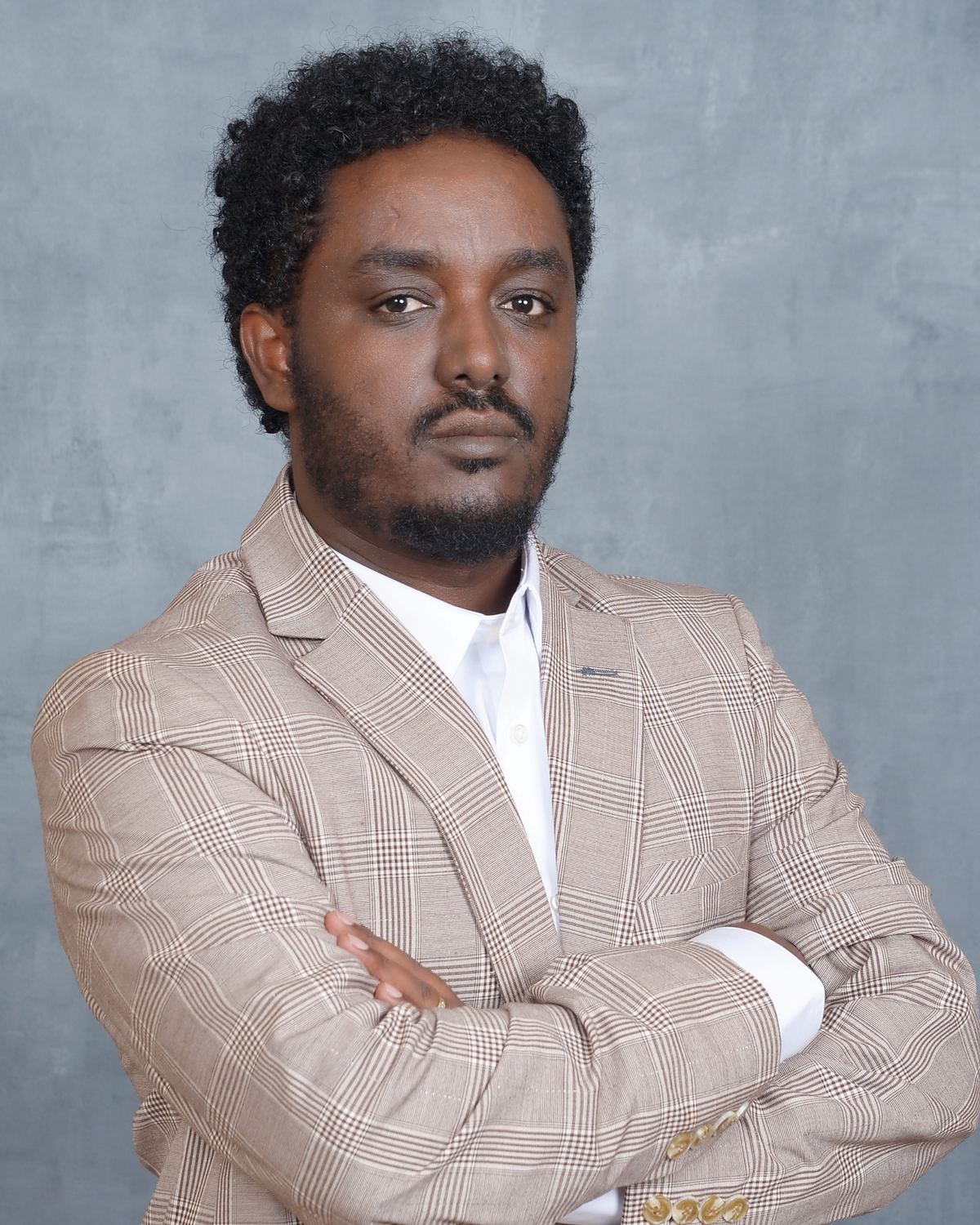
Baye Teshager Asmamaw
Fifty words
Baye Teshager Asmamaw is an Ethiopian writer and participant in the Amhara resistance. Across Ethiopia, Italy, and the United States, he wrote, organised, and broadcast for a movement he believed defended his people’s life and dignity. Half a Knife is his reckoning with its achievements, its costs, and the choices facing the coming generation.
One hundred words
Baye Teshager Asmamaw is an Ethiopian writer and participant in the Amhara resistance. Across Ethiopia, Italy, and the United States, he wrote, organised, and broadcast for a movement he believed defended his people’s life and dignity. He co-founded multiple media organisations and published essays and commentary across print, digital, social, and mainstream media. He now reckons with the resistance’s achievements and costs, and with the strategic choices facing the coming generation.
Two hundred and fifty words
Baye Teshager Asmamaw was born in Debark, in North Gondar, and raised there by his grandmother, Emahoy Chaklit Wassie, in deep poverty. He finished school at the top of his class, took an engineering degree at Bahir Dar University and a master’s in Addis Ababa, and was posted first to Assosa University and then to Addis Ababa Science and Technology University, where in his final year he became Dean of the School of Chemical and Materials Engineering. He left Ethiopia at the beginning of September 2014 for a second master’s at the University of Trento, returned for the last time in the summer of 2015, and reached the United States in January 2017.
He had written politics under his own name since 2010; the break came in a post from Trento in January 2015, written four months before that year’s election, in which he broke with the design of the Ethiopian state itself. In 2016 a colleague gave him the pen name Neakutoleab — with the charge “let it be proclaimed” folded inside it — and he carried it for seven years, through the Gondar uprising, the diaspora campaign for United States House Resolution 128, the building of ASRAT Media, essays in the magazine Fitih, and a Facebook following that passed twenty thousand. In June 2023 he laid the pen name down and stopped writing publicly.
Half a Knife is his reckoning with those years, built from memory and a dated archive of 3,471 of his own posts, 2009 to 2025, alongside essays, letters, and broadcasts kept across Ethiopia, Italy, and the United States. Where memory and the record disagreed, the record governed. He lives in Winchester, Virginia.
For producers and editors
Interview angles
Six conversations this book can carry. The author is comfortable being pressed and prefers interviewers who disagree with him.
A just cause, a failed strategy
What an insider learned about the difference between a people’s right to defend itself and the wisdom of the strategy chosen in its name.
The archive against the self
How a writer uses his own dated record to correct his memory, resist self-exoneration, and write political confession.
Why write it in English
Why the Amhara story is underrepresented in the languages the world reads, and what a first-person archive adds to scholarship and policy.
Exile and helplessness
The long estrangement of living away from your own people while continuing to watch them suffer — and what distance clarified and distorted.
Coming back to the peaceful road
Why a man who spent years in resistance work now argues for patient, civic struggle — and what it cost him to say so publicly.
What a movement leaves the young
What the next generation should inherit from a political movement besides slogans, heroes, and enemies.
Downloads
Cover and photographs
Front cover
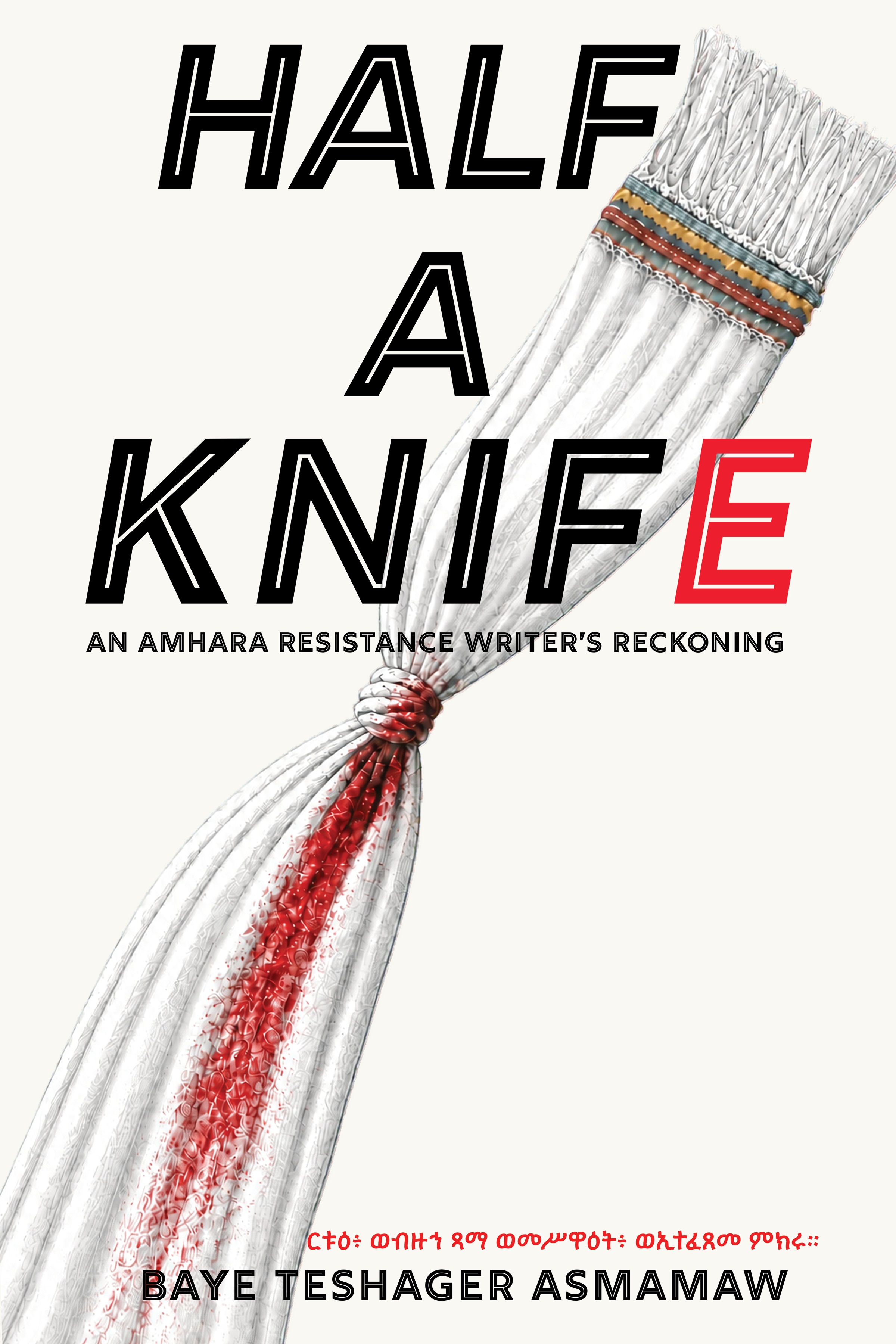
The front cover at print resolution, 2400 × 3600 pixels.
Credit: cover design by the author.
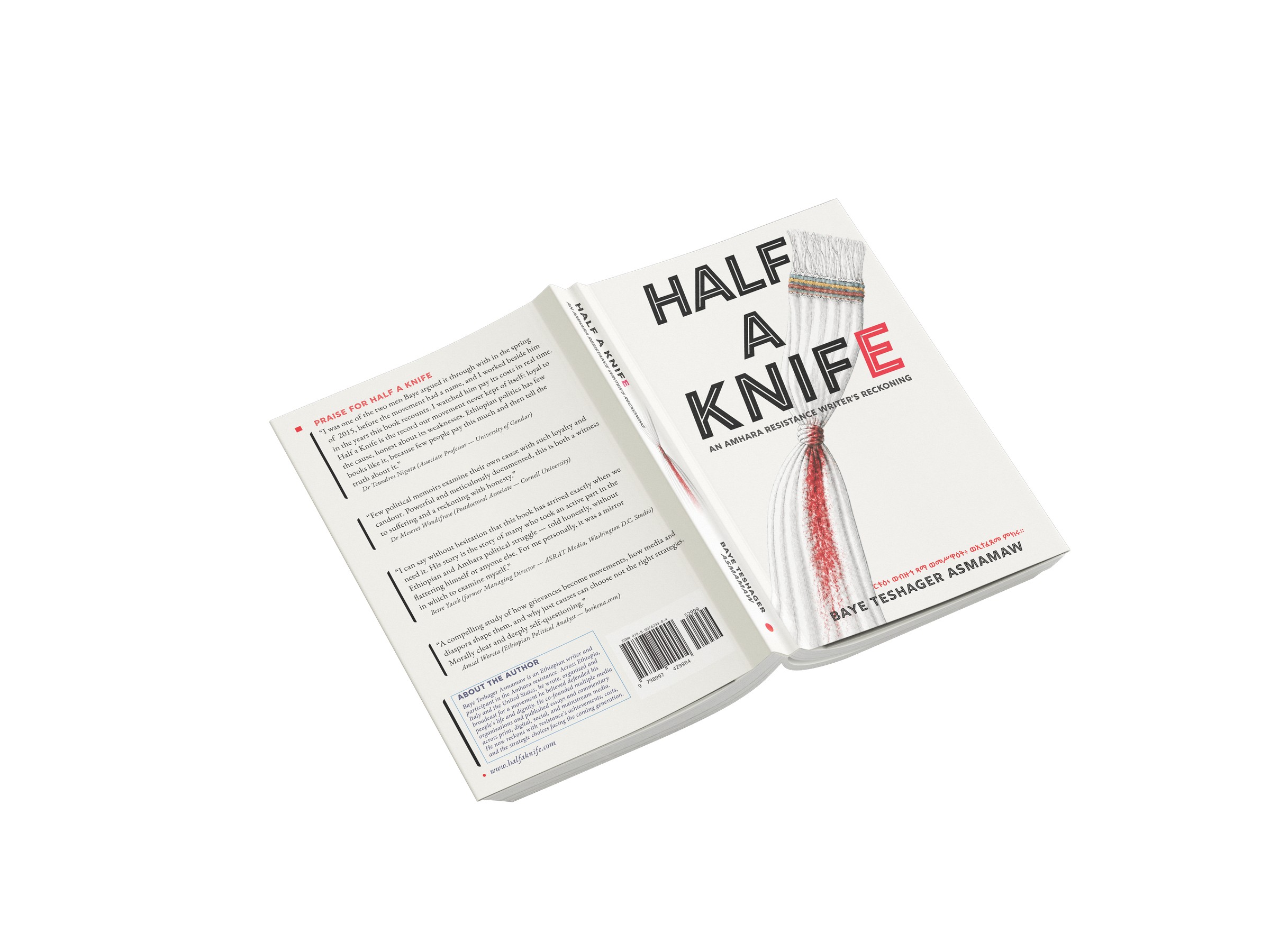
Back cover and full wrap
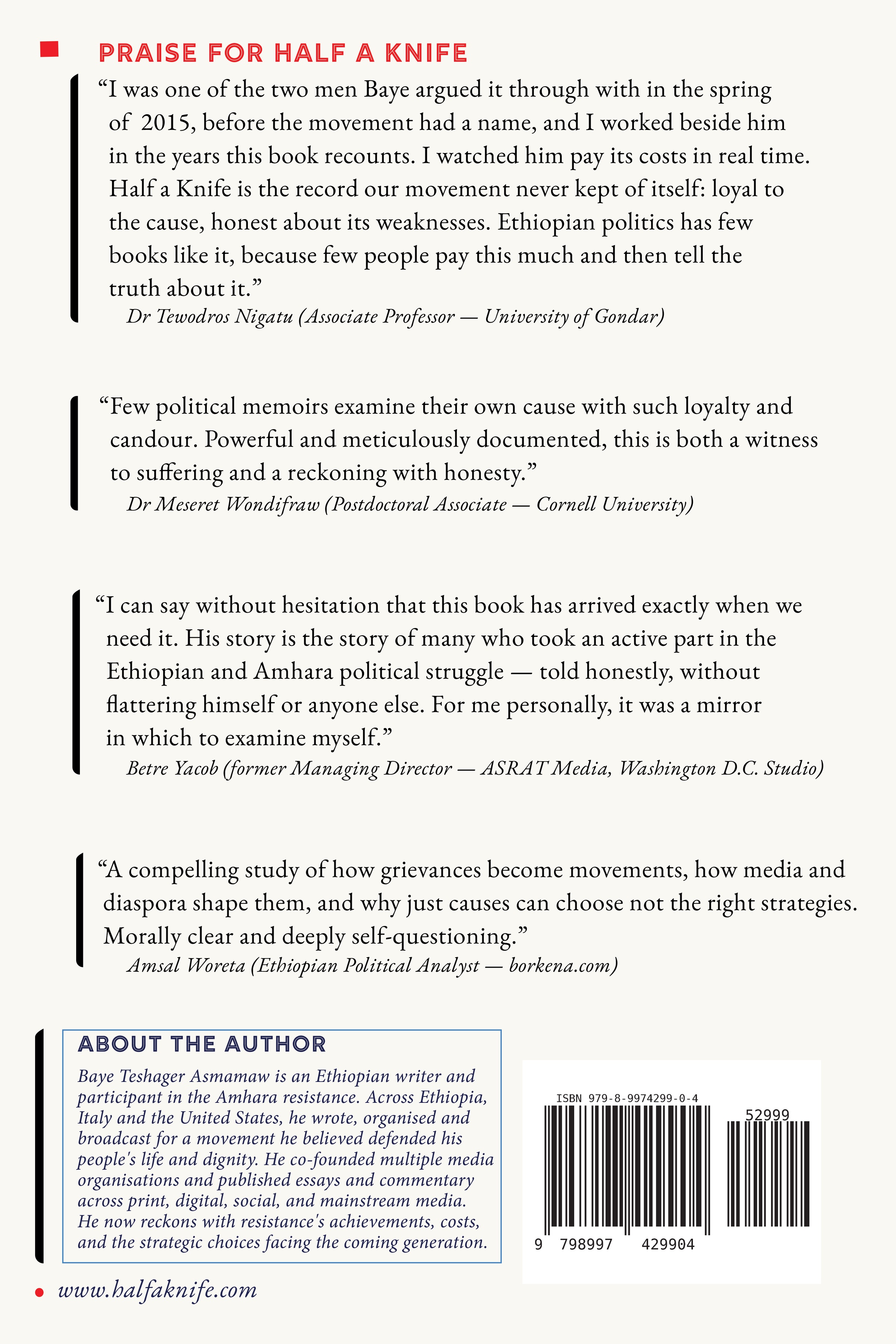
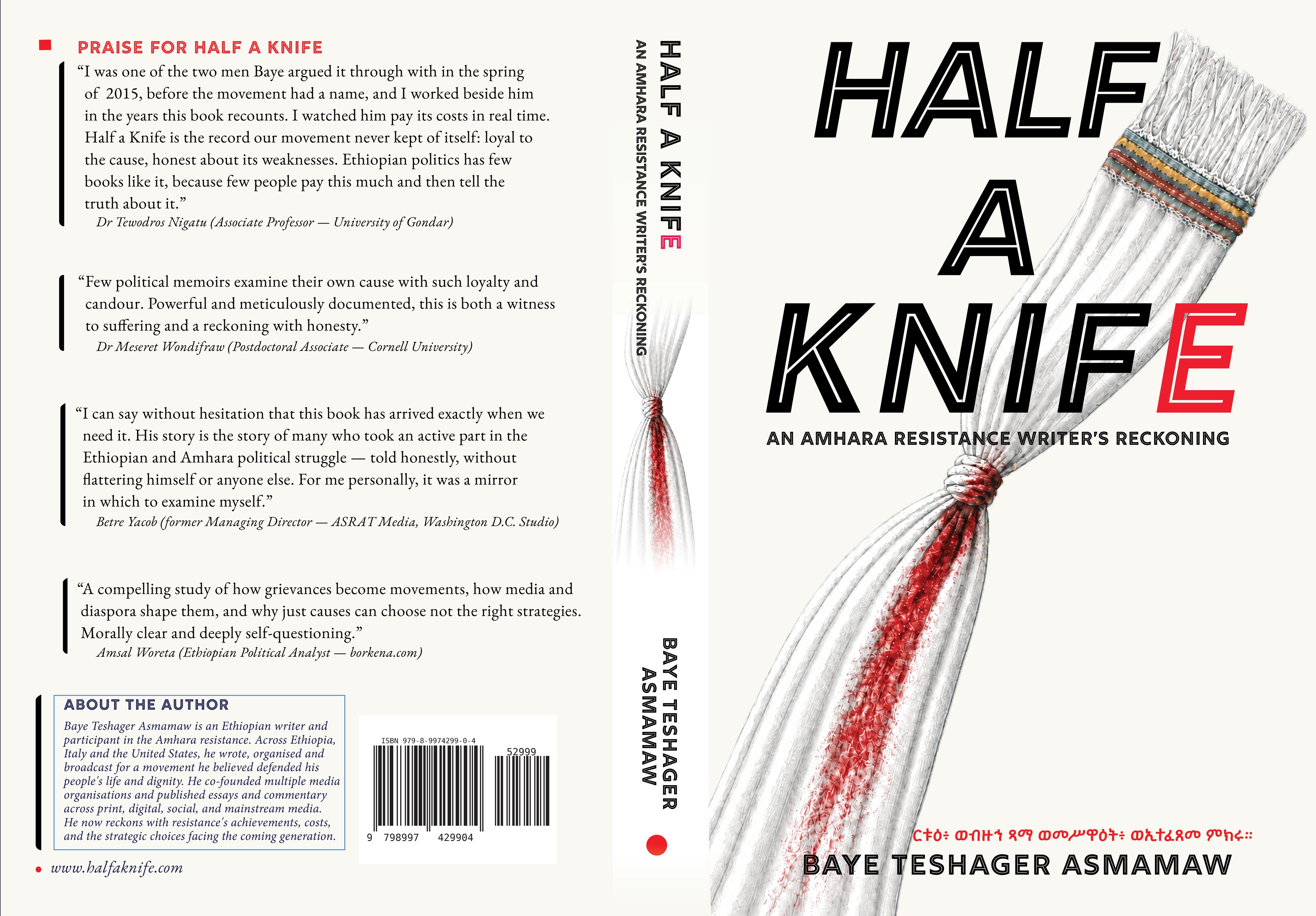
The back cover at print resolution, and the complete wrap including the spine.
Credit: cover design by the author.
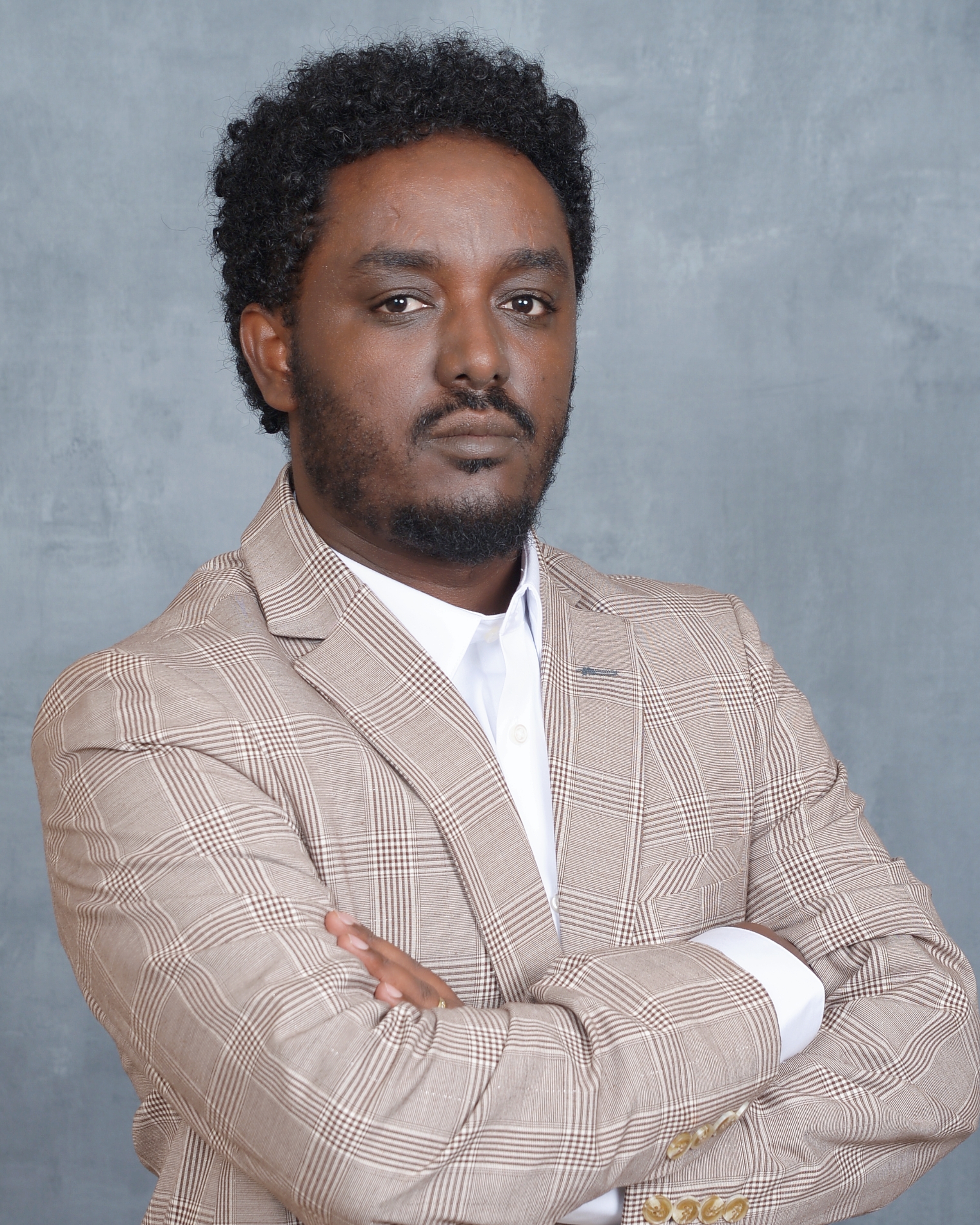
Author photograph
Portrait of Baye Teshager Asmamaw.
No photographer credit required.
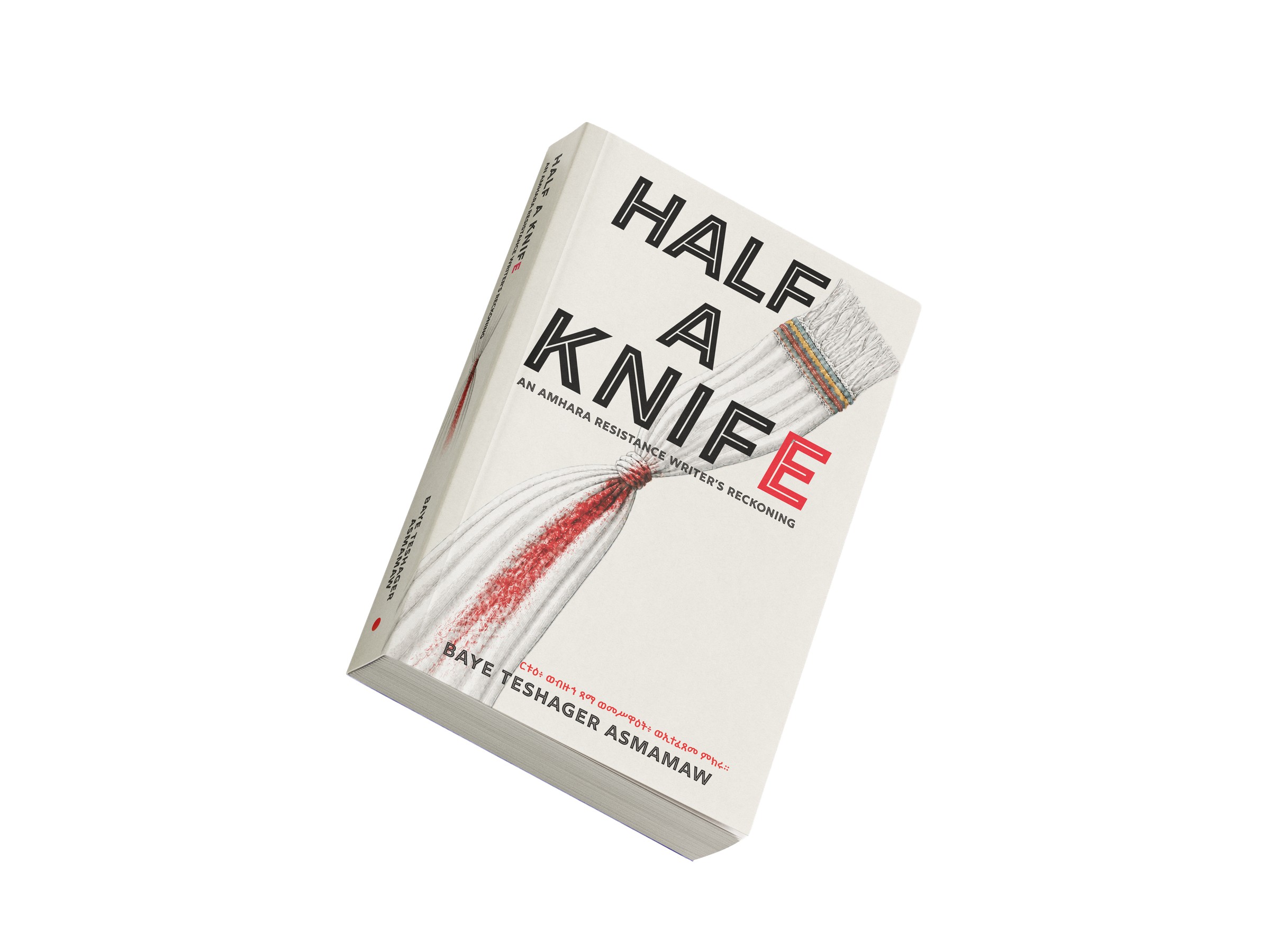
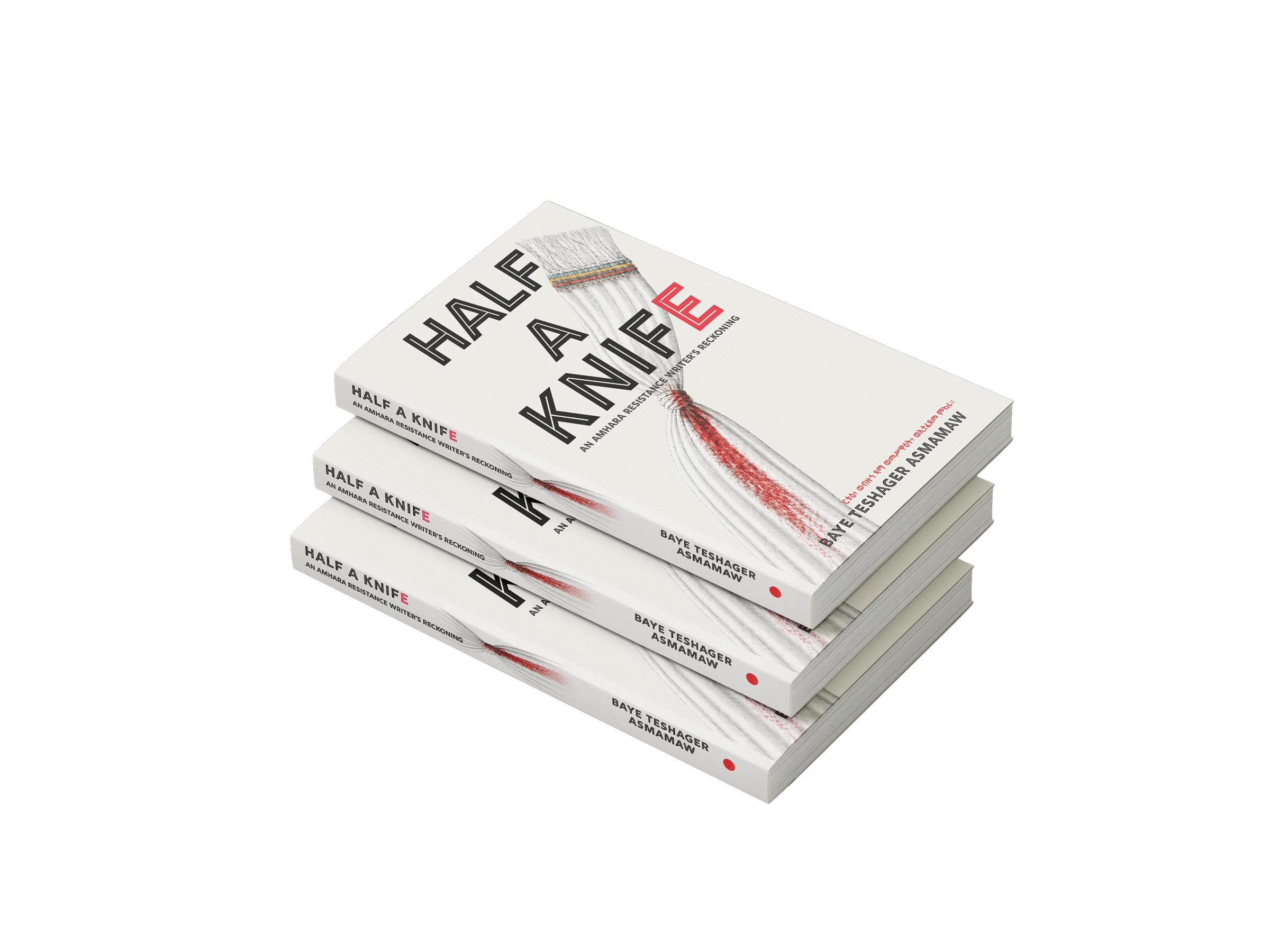
Paperback mockups
Three renders for articles and social posts: a single copy cut out on transparency, and two lit scenes — a stack, and the book open flat so the back cover reads.
Credit: cover design by the author.
Full press kit
Everything on this page in one archive: front cover, back cover, full wrap, author portrait, the fact sheet, all four descriptions, all three biographies, the interview angles, and the endorsements as printed.
ZIP, about 8 MB.
Please reproduce the cover whole and unaltered, and use the full subtitle.
Contact
Interviews, reviews, and corrections
For interview requests, review copies, permissions, and event bookings: [email protected].
If you believe something in the book or on this site is factually wrong, write to the same address with the passage and your source. Corrections are published rather than quietly made.
Comment policy
Serious disagreement is welcome. Comments that threaten, expose private information, use ethnic or personal slurs, or repeatedly attack individuals rather than address the book’s argument will be removed.
The purpose of this space is reading, evidence, reflection, and accountable conversation.